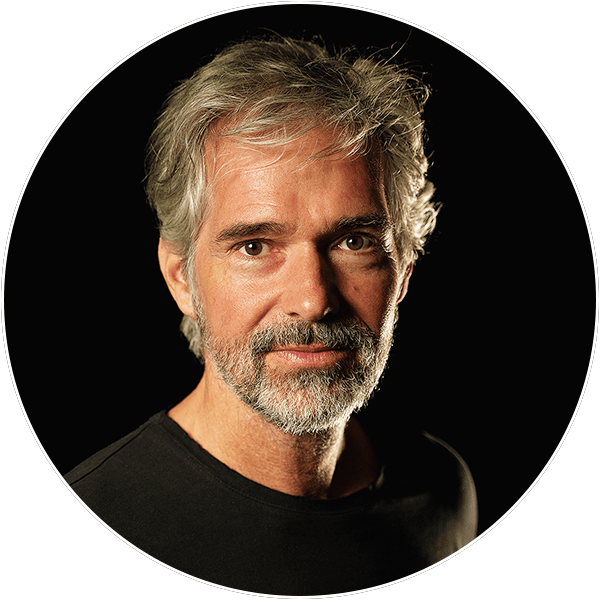
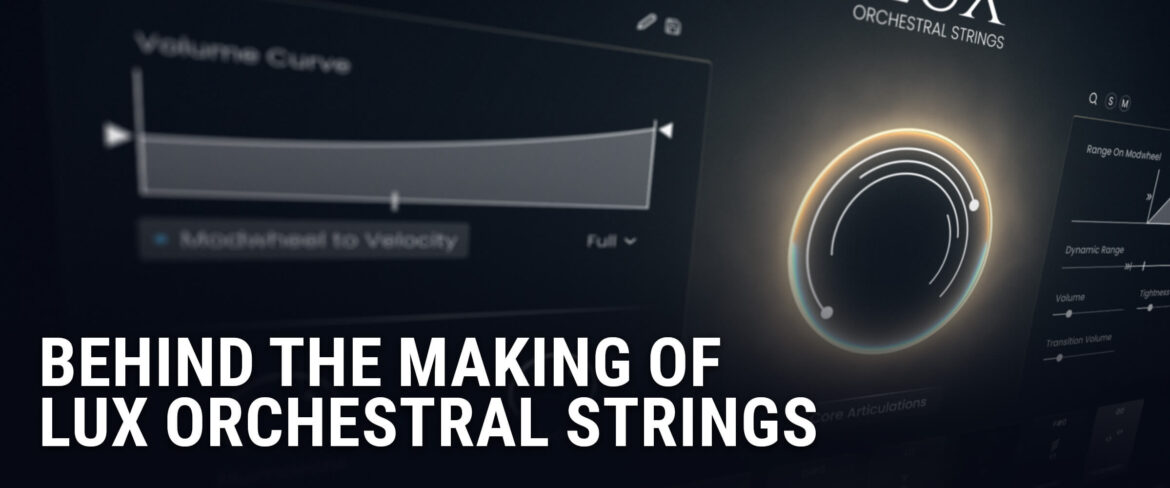
We sat down with our founder Tilman Sillescu to talk about the vision behind our most ambitious instrument yet, the choices that shaped it, and the details that make it special.
Starting with a Dream
For years, at Sonuscore we’ve built instruments that balance practicality with imagination. Smaller sections, smaller rooms, clever scripting: out of necessity came innovation. Those ingenious touches have made our instruments loved across the composer community.
With LUX Orchestral Strings, we finally wanted to see what would happen if those limits were lifted. It is still full of the innovations that make Sonuscore unique, but now paired with sonic excellence on a grand scale. The result is breathtaking.
“We’d always worked within boundaries,” Tilman explains. “That’s where our smart engines and features came from. But with LUX, the whole idea was to go further, to build something on a grand scale without compromise. It’s the library we had been dreaming of for years.”
The inspiration came from the great widescreen scores: John Williams, Alan Silvestri, the sound of E.T., Raiders, Jurassic Park. “We all love that grandeur,” says Tilman. “When you are watching vast landscapes or huge action scenes, the score should feel just as wide. A smaller, drier sound has its place, but we wanted to give composers a way to create timeless Hollywood textures.”
Capturing the Right Space
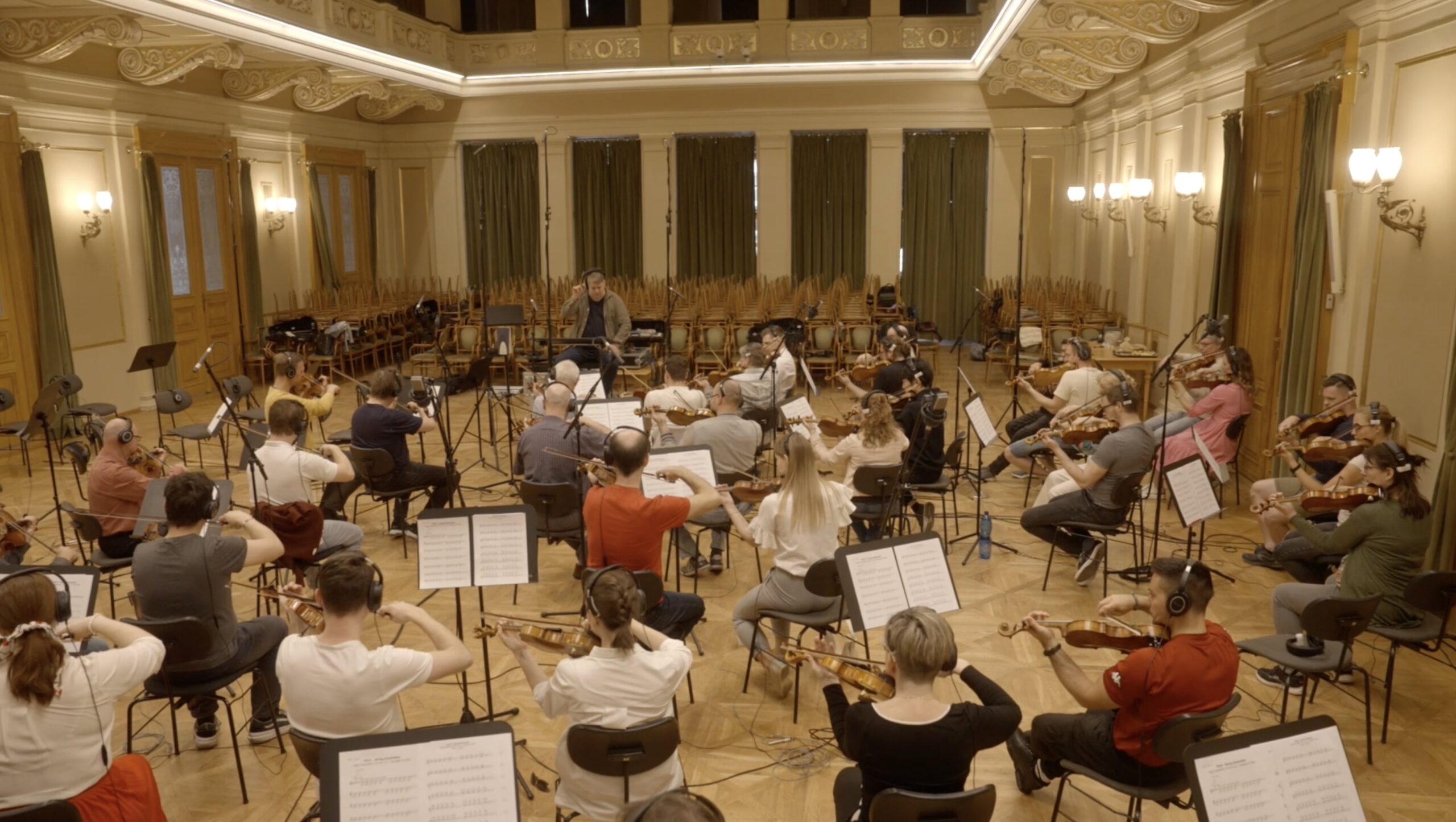
That ambition shaped everything, starting with the recording location. We tested several venues before settling on a large concert hall in the Czech Republic. “The test recordings were overwhelming,” Tilman recalls. “The sound had both grandeur and clarity. Expansive but never muddy. We knew immediately it was the right place.”
To make the most of it, we brought in veteran mixer Peter Fuchs, whose credits include Danny Elfman, Marco Beltrami, John Ottman and Christopher Young. “In the early days we mixed everything ourselves,” Tilman admits. “But this time we wanted a legendary set of ears. Even Peter’s first drafts sounded extraordinary. You could play back a single sustain and it already felt like music.”
Microphone Bleed
One of LUX Orchestral Strings’ standout sonic features is something we call Microphone Bleed. Some virtual instruments have experimented with adding spill before, but never on this scale. Instead of just recording close and room mics for the sections in use, we set up microphones for the entire orchestral layout — brass, winds and percussion included — even though only the strings were playing.
“That meant we captured the natural spill you would hear with a full symphony on stage,” Tilman explains. “It is subtle, but when you blend it in, suddenly your line feels like part of a real orchestra. This is the sound that glues big Hollywood scores together.”
In practice, composers have full control. With a simple fader you can dial in as much or as little bleed as you want, and even switch between spill from the rest of the string ensemble or from the full orchestral layout. It is both flexible and authentic, giving you the ability to shape the sense of scale in your own mix.
Technology With a Human Touch
LUX Orchestral Strings does not only rely on its recording. As is to be expected with a Sonuscore instrument, several new technologies make it feel alive under the fingers.
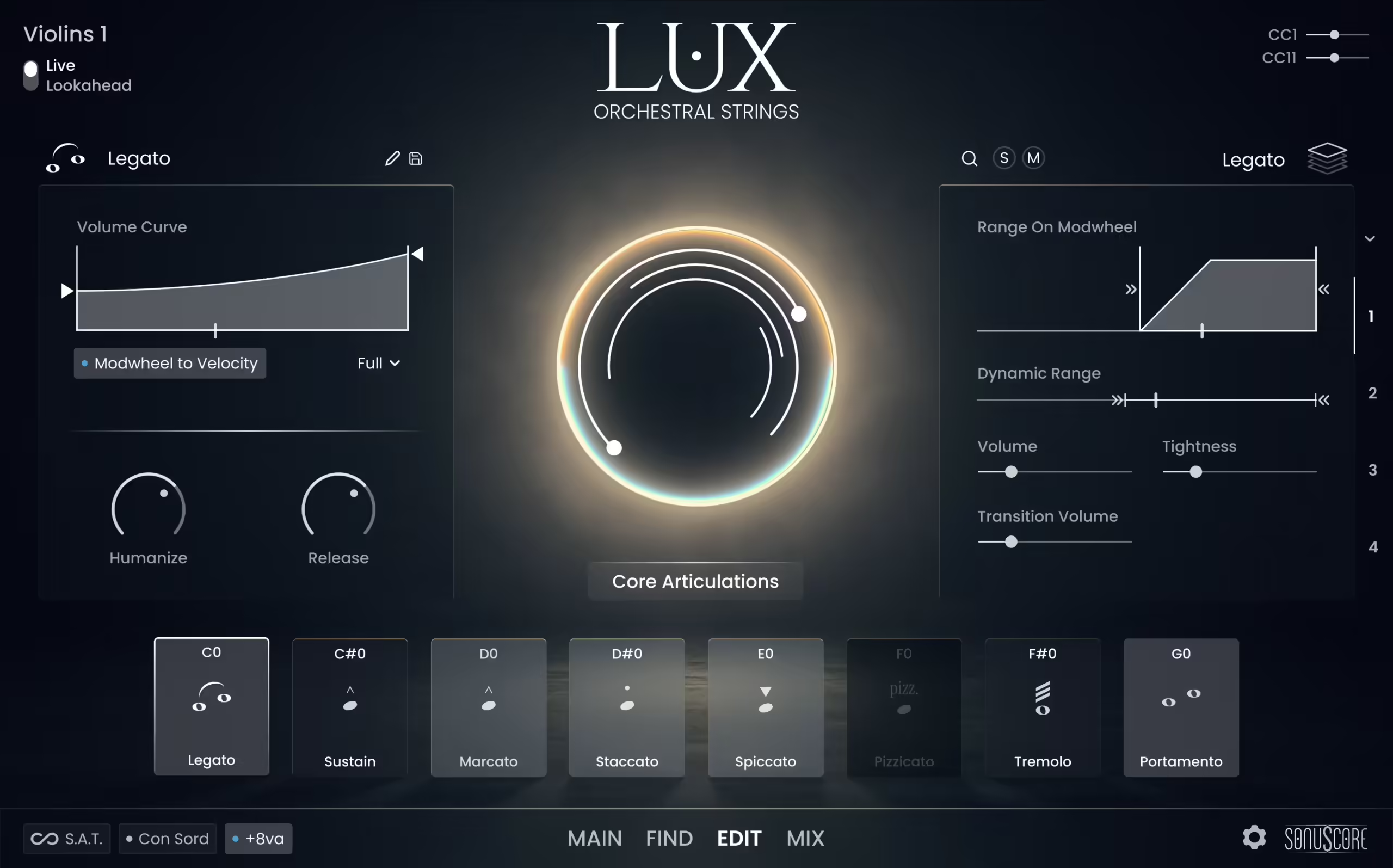
Seamless Articulation Transitioning (SAT) was a late addition that quickly became a favourite. It allows you to hold a chord and switch articulations via key switch, morphing naturally as real players would. “When we first tried it, we couldn’t stop playing,” Tilman says. “It makes the instrument feel alive.”
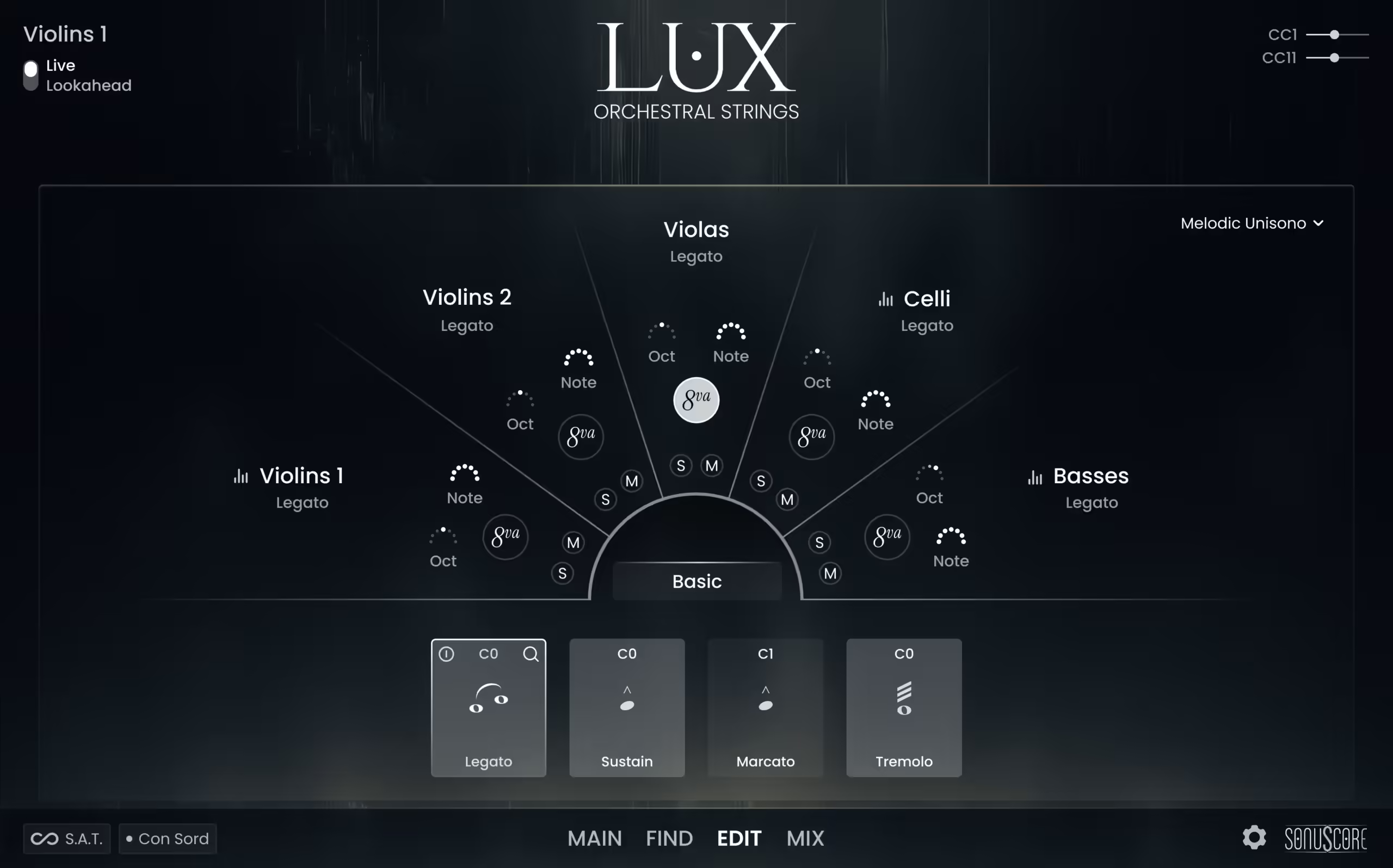
Morphing Articulations build on the same idea. They let up to four sounds be layered under a single key switch and blended with the mod wheel. Sustains can evolve into tremolos or harmonics, creating textures that move and breathe without layering multiple tracks.
Natural String Change was inspired by violinist and lead scripter Jonas Meyer. It models the way a note lingers when a player shifts strings. It is a subtle detail that listeners rarely notice consciously, but it makes legato lines feel authentic.