LUX ORCHESTRAL BRASS is the second library in our LUX series, following LUX ORCHESTRAL STRINGS. This is the story of how it was made: the plan the team started with, the conversations with working composers that changed it, and why a library with fewer articulations ended up needing more recording days than Strings.
Where LUX ORCHESTRAL BRASS started
Since its release, LUX ORCHESTRAL STRINGS has become a regular tool for many professional composers. That success made it easy to continue the LUX series, with brass as the obvious next section to record.
The team planned to use the same approach as with Strings: create a wide range of sounds, recording every articulation, texture, and special technique brass can offer, from flutter tongue to multiphonics. Everyone was excited about what they could achieve.
Before recording began, Sonuscore co-founder Tilman Sillescu spoke with several composers who had helped shape LUX ORCHESTRAL STRINGS. He asked them what their ideal brass library would be.
“The answers were quite different from what we expected,” Tilman says.
The composers said special techniques were interesting, but they rarely used them in daily work. What they wanted was simpler, but also more demanding.
As Tilman remembers it, the message was clear: “Give me the stuff I use all the time. Give me a fantastic sustain, give me a great legato, give me really short and tight staccatissimos, give me staccatos, give me powerful marcatos.”
The instruction that followed was clear: “And then make that stuff really, really good.”
“And that was actually the moment when our whole idea for LUX ORCHESTRAL BRASS changed,” says Tilman.
Depth And Quality Over Variety
For the kind of music most composers make, brass came down to depth and quality. In practice, that meant consistent sound across sustains, marcatos and shorts. It meant a real dynamic range, capturing the enormous change in timbre from pianissimo to fortissimo. And it meant getting ideas into the DAW quickly, without hours of programming to make a melody sound realistic.
The last point is an underpinning Sonuscore philosophy: a composer with an idea in their head wants to play it immediately, and hear something worth getting excited about while they play.
“If I’m playing a lyrical horn melody, I don’t want to imagine how emotional it might become when a real horn section plays it,” Tilman says. “I want to feel that emotion while I’m writing it.”
Composer John Enroth once told us that playing LUX ORCHESTRAL STRINGS felt like being in the room with the musicians. That became the goal for Brass as well.
“We want you to play these instruments and somehow forget that you’re playing samples,” Tilman explains.
Instruments Designed Around How Composers Write
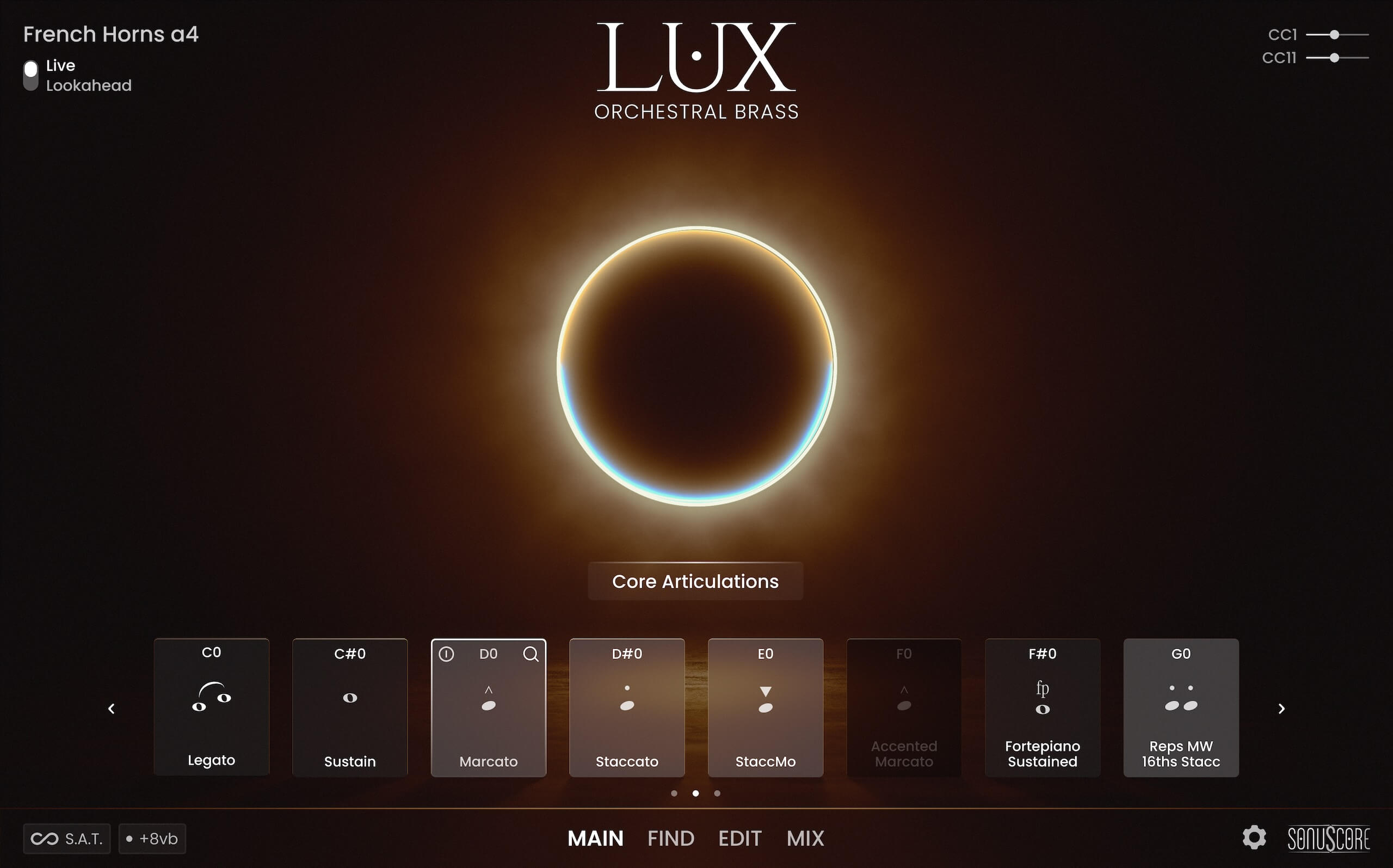
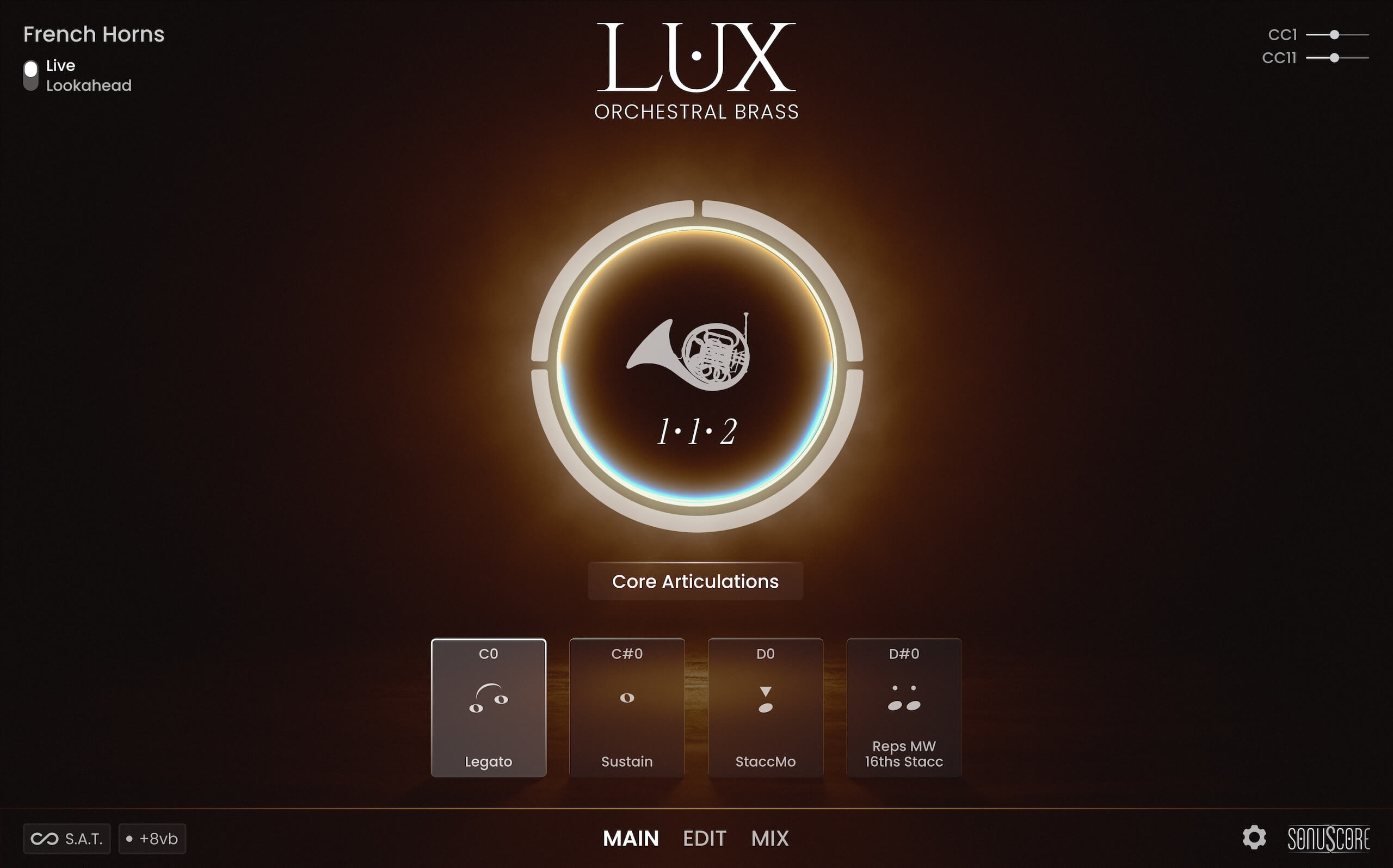
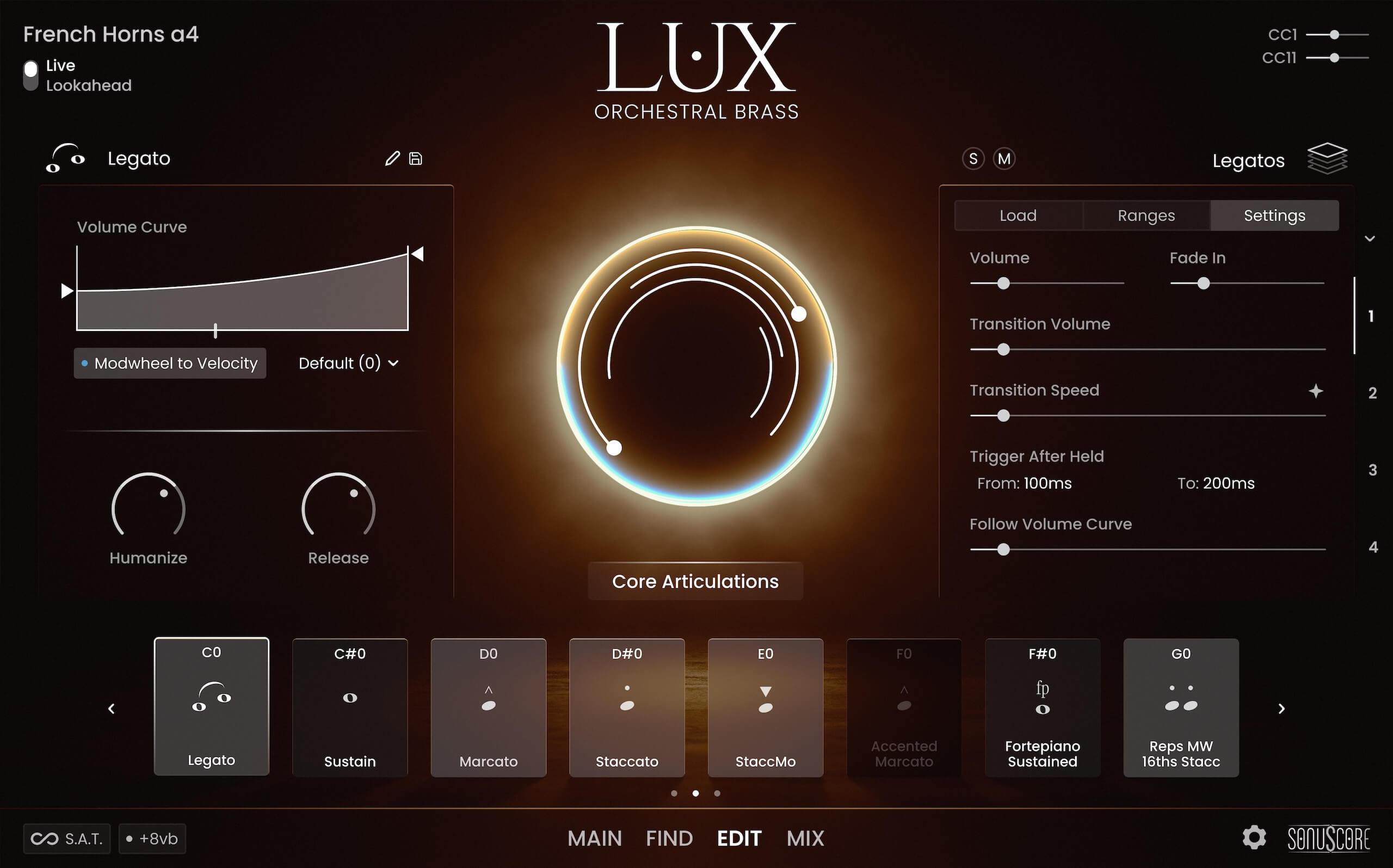
That goal influenced both the patches and the recordings. Normally, writing a heroic melody means switching keyswitches between staccatissimo and marcato. LUX ORCHESTRAL BRASS has a patch that detects how long you hold each note. Play short notes for a tight staccatissimo; hold them longer for an accented marcato. This lets you play agile, fanfare-style lines in one go.
“I just want to play the melody and enjoy it,” says Tilman.
For softer section writing, the Auto Divisi instruments manage Polyphonic Legato. Play one note and all four horns play together. Play two notes and the section splits into pairs. Play four notes and each horn gets its own line. This way, a four-note chord stays with four horns, instead of turning into sixteen.
The Ensemble instrument works the same way. When a trailer cue already has big drums and strings, the main question is whether an idea works with powerful low brass. Loading tuba, bass trombone, cimbasso, trombones, and horns one at a time slows things down.
“I just want to load Low Brass, put my hands on the keyboard and go,” he says. “If the idea works, fantastic. I can orchestrate it properly later if I want to. But the idea is already there.”
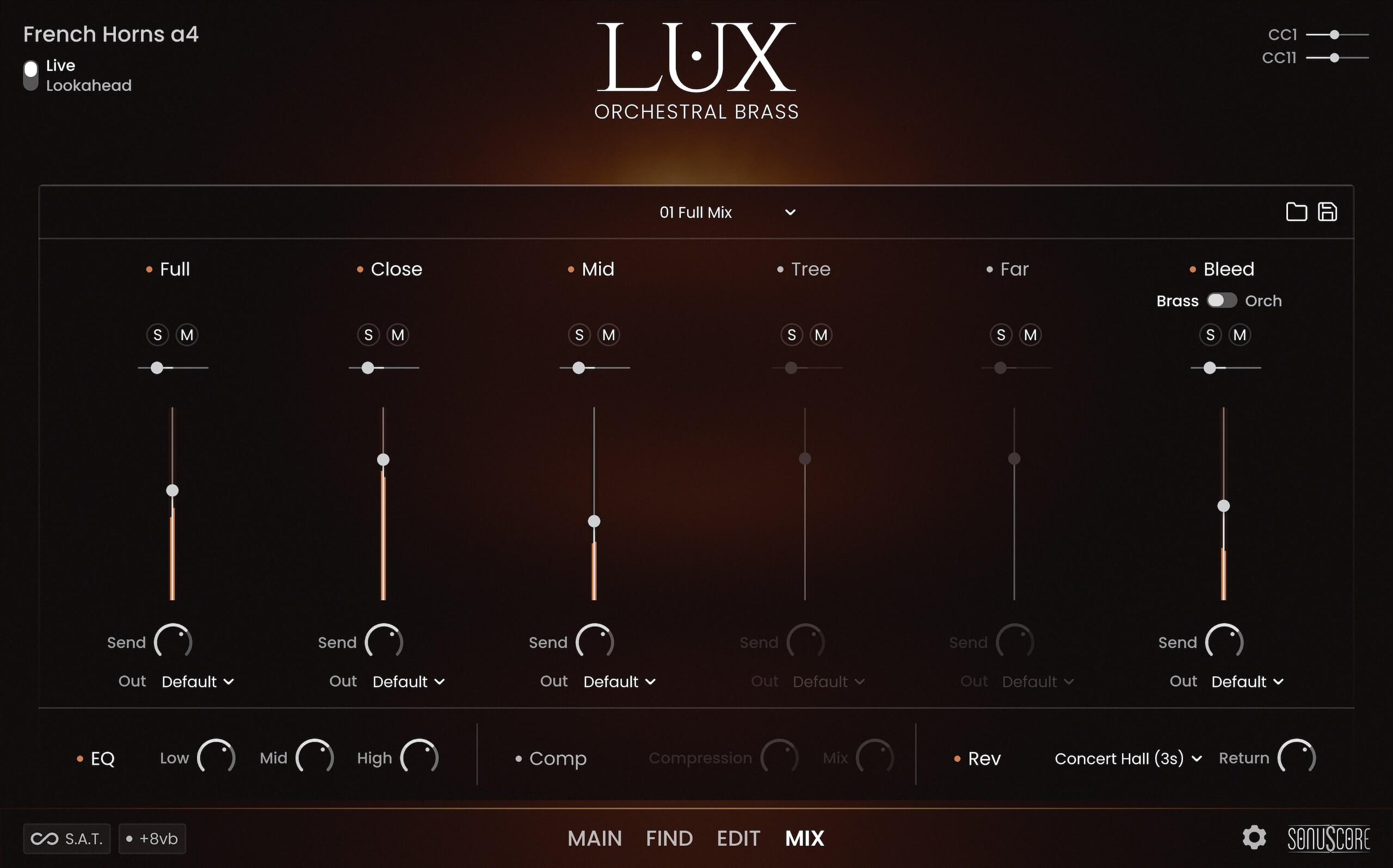
That principle is at the heart of the whole library, from the Ensemble NKI with smart note assignment to the Adaptive patches and the Repetition Tool. As Tilman says: “How quickly can we get from the idea in your head to something that already feels like music?”
The Soloists
The original line-up was a classic cinematic section: four horns, three trumpets, three trombones, bass trombone, tuba, and cimbasso. But the composers had more feedback.
“Yes… but we also need the soloists.”
So the plan changed. The final recordings include Solo Horn, Horns a2, and Horns a4; Solo Trumpet and three Trumpets; Solo Tenor Trombone and three Tenor Trombones; plus Bass Trombone, Contrabass Tuba, and Cimbasso. If you layer Solo Horn, a2, and a4, you get seven horns playing together in the same room.
Recorded In The Same Room as LUX ORCHESTRAL STRINGS
The recordings took place in the same space as LUX ORCHESTRAL STRINGS, using the same core microphone setup. The brass players sat exactly where they would in a real orchestra, behind the strings.
Peter Fuchs returned to advise on microphone placement and recording, then brought his cinematic mixing experience to the finished library. Having a top mixer shape the tone adds another layer of realism the moment you start using it.
“So if you already own LUX ORCHESTRAL STRINGS, these two libraries really belong together,” Tilman says. “You’re basically building the orchestra in the same room, section by section.”
Fewer Articulations, More Recording Days
With fewer special techniques to record, the team thought Brass would be an easier project. But it actually took more recording days than LUX ORCHESTRAL STRINGS.
“So much for that idea,” Tilman says, raising his eyebrows.
The extra time went into depth, focusing less on every possible brass sound and more on what composers need most. Tilman is clear about what that means for the finished library.
“It’s not supposed to contain every brass sound ever invented. If you desperately need some crazy extended technique, yes, you might have to open another library.”
“But for those 95% of the time when you need beautiful legatos, warm chords, powerful marcatos, tight shorts, repetitions, heroic fanfares, huge low brass or a beautiful solo line, we wanted this to be the library you open.”