Hermann Schepetkov: A Composer’s Journey Into Trailer Music
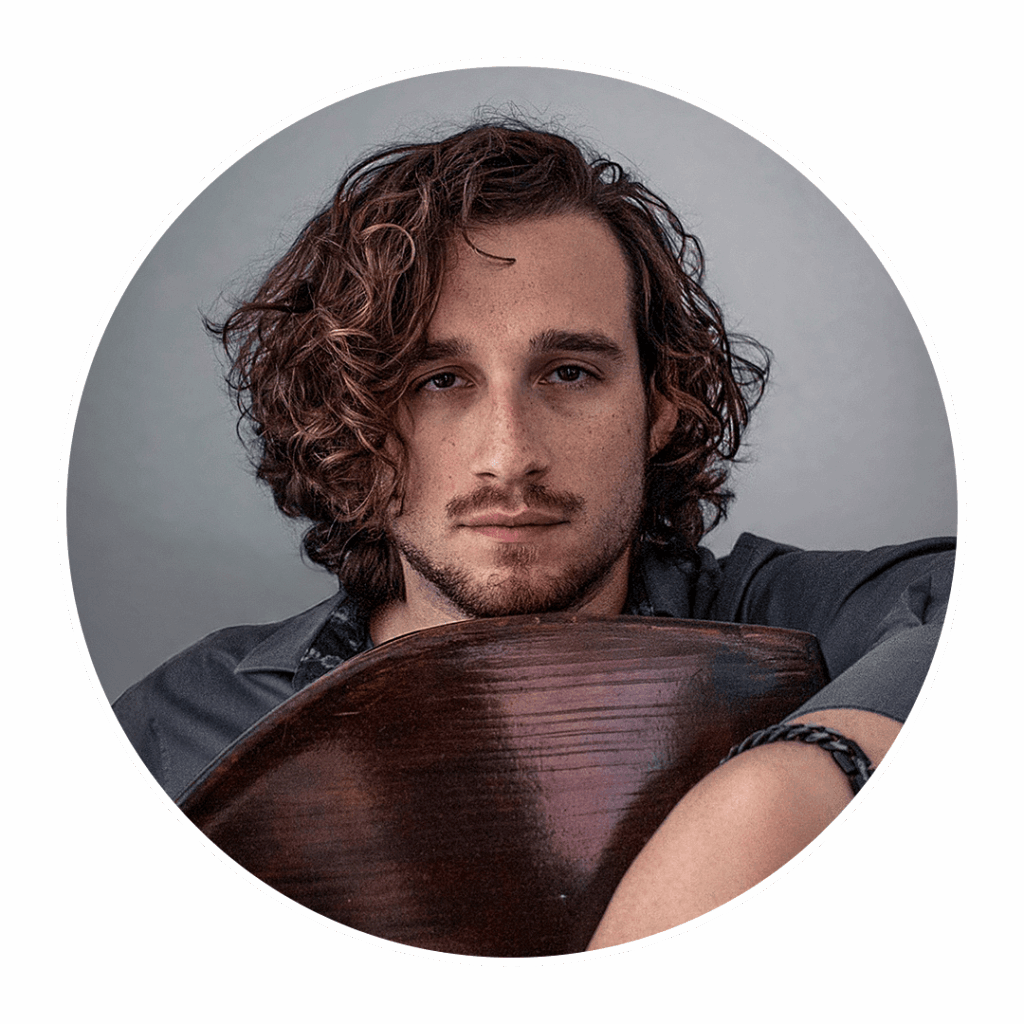
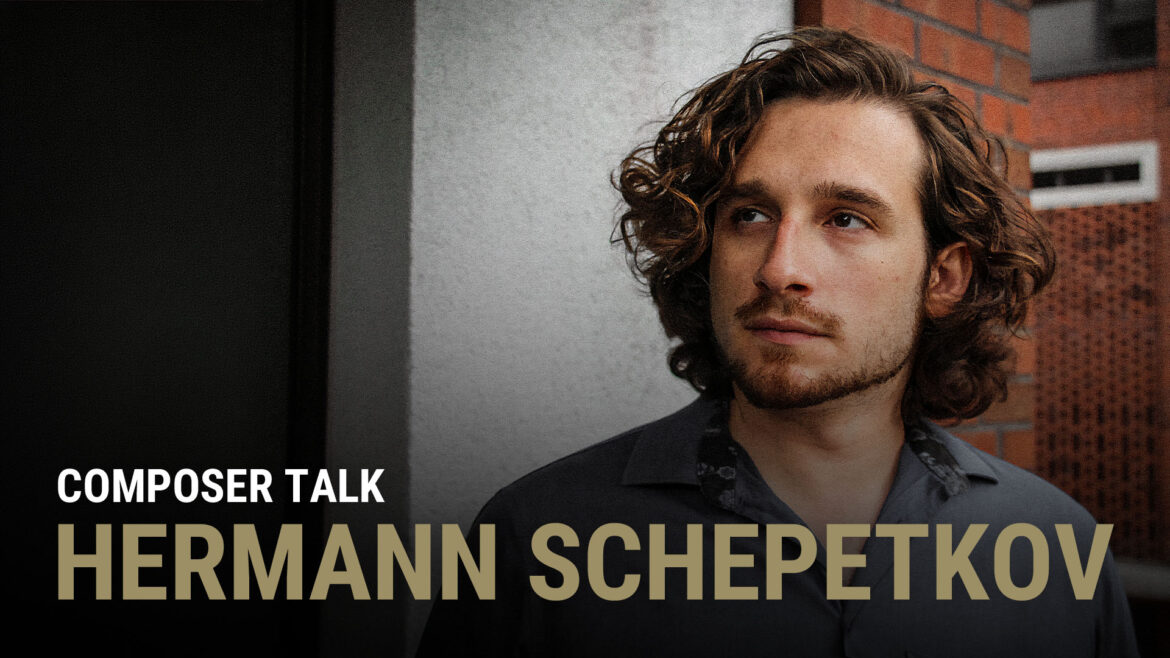
Hermann Schepetkov, known as Mr Herms, never planned to write music for game trailers. He first wanted to play bass. Before that, he aimed to become an electrical engineer. Even earlier on, he was a three-year-old moving from the Soviet Union to Germany with his family.
Now, after working on trailers for Battlefield 6, Apex Legends, League of Legends, Warhammer 40K: Space Marine 2, Assassin’s Creed, Dragon Age, Jurassic World, as well as a Google anniversary spot, he says his career happened by accident, one step at a time.
“It’s basically one happy accident after another,” he says. He means it as a description, not a complaint.
Quitting Engineering For A Band
Music was always part of his life. His father taught music in the Soviet Union, but his qualifications didn’t count in Germany, so he worked doing house maintenance instead. Still, he kept teaching music at home.
Schepetkov tried to leave music behind more than once, but it always found its way back to him. At eighteen, he began studying electrical engineering. A year later, he dropped out to start his band. He then began a bachelor’s in Jazz playing bass, but left that too; finally, he was accepted into the Popakademie Baden-Württemberg in Mannheim.
The “Chicago Turning Point”
A twist of fate during his time at the Popakademie Baden-Württemberg changed everything. Schepetkov and his best friend Louis Leibfried ended up in Chicago on a trip that was supposed to be session-based, but somewhere along the way the paperwork listed them as producers. So, they became producers on the spot.
“We bought Logic the same night and started producing. And that’s how we got into music production.”
That trip to Chicago set a pattern for his career. Years later, as he tried to break into trailer music, something similar happened. His tracks made their way to the right ears, and he was asked if he had ever worked on a trailer before.
“My answer was immediately yes. The truth was no. I had no idea what they were talking about, but I said yes.“
He spent the first year just listening to trailer music and composing ad cues. The second year writing his first trailer music pieces. He got his foot in the door, learned the craft working at 2WEI and in 2024 decided to go independent.
The Genius In Simplicity
At first glance, classical Chopin and a Battlefield trailer seem worlds apart, but for Schepetkov, there’s a clear connection. Classical music led him to jazz, then to heavy metal, then to dubstep, and from there, trailer music is only a short step away. That path is what lets him pull off unusual combinations, like sneaking jazz chords into his own classical-sounding pieces.
But it wasn’t his conservatoire training that led him to the intense side of music. What really pushed him was seeing simple song arrangements achieve things his more complex pieces couldn’t.
“I think people start to complicate things because they are not able to say something in a simple manner. You want to do something very exciting, you start writing complex music, and then someone like Skrillex does a simple melody over something, and everybody’s like, that’s it? And the professional musicians are like, no, that’s not it. At some point I wanted to understand where the genius in simplicity lies.“
He shares an example from earlier that day. While producing a trap remix for a brand campaign, he first made a version where the 808 bass followed the chord changes, just like a trained composer would. Then he tried another version where the 808 stayed on a single note the whole time.
Musically wrong by classical logic. He sent both to the client. The client picked the second one.
“He was absolutely intuitively picking the wrong idea. Which is the right idea for a non-musician. Not changing the chords, because my composition mind says this is how it’s supposed to be, you know? But no, the top notes can change all the way you want, and we will stay on the E until the end.“
He believes that having a master’s degree in composition sometimes holds him back more than it helps.
Computers And Real Instruments Working Together
Schepetkov uses Cubase, working with a large template connected to Vienna Ensemble Pro. This way, his full library is ready to go before he even starts playing. He can bounce stems while taking a coffee break.
But he rarely uses loops. The room he’s speaking from isn’t even his studio; it’s his home, filled with instruments he plays himself. There’s a French horn, trombone, cello, violin, six-string bass, and acoustic bass within arm’s reach. He picks up whatever is closest and plays it into the session.
If he starts on bass, muscle memory takes over, and things get predictable. But when he picks up an instrument he barely knows, unexpected things happen, and that’s exactly what he wants.
“I would always start with licks or something which I already know, which are the trusty things; it would always be the same from a certain perspective. I don’t like that. Instead, I would grab my violin, where I have no idea where the notes are. Whatever I play is something else. I basically can’t control it, you know? And I love it. Accidents are happening.“
His Favourite Libraries Are Old
When it comes to sample-based instruments, Schepetkov doesn’t hold back. After years of working in advertising and trailer music, he thinks most of the best libraries he uses are actually old. His former favourite string library, is probably the best romantic-sounding library out there, and it’s over ten years old. The samples haven’t changed in twelve years. Only the interface has, but he says no one really cares about that.
“A nice interface is one thing, but it comes down to the samples. You can hear it when someone took the time to record everything properly.“
So when LUX Orchestral Strings showed up in his inbox from a Sonuscore newsletter, he didn’t expect much. It was just another string library, and he already had plenty. He asked for a demo, thinking he’d probably move on. But the bending articulations caught his attention.
“It’s like it’s played, somebody recorded that. It’s not like I have to program some bend or do a pitch down or something. The slide harmonics, the playability is just great. And what is also incredibly great about LUX Orchestral Strings is the adaptive legato. Honestly, the best adaptive legato there is on the market right now in my opinion. I tried some Harry Potter licks, just for the laughs, just to see if it works, and it was incredible. No programming involved, just the modwheel.“
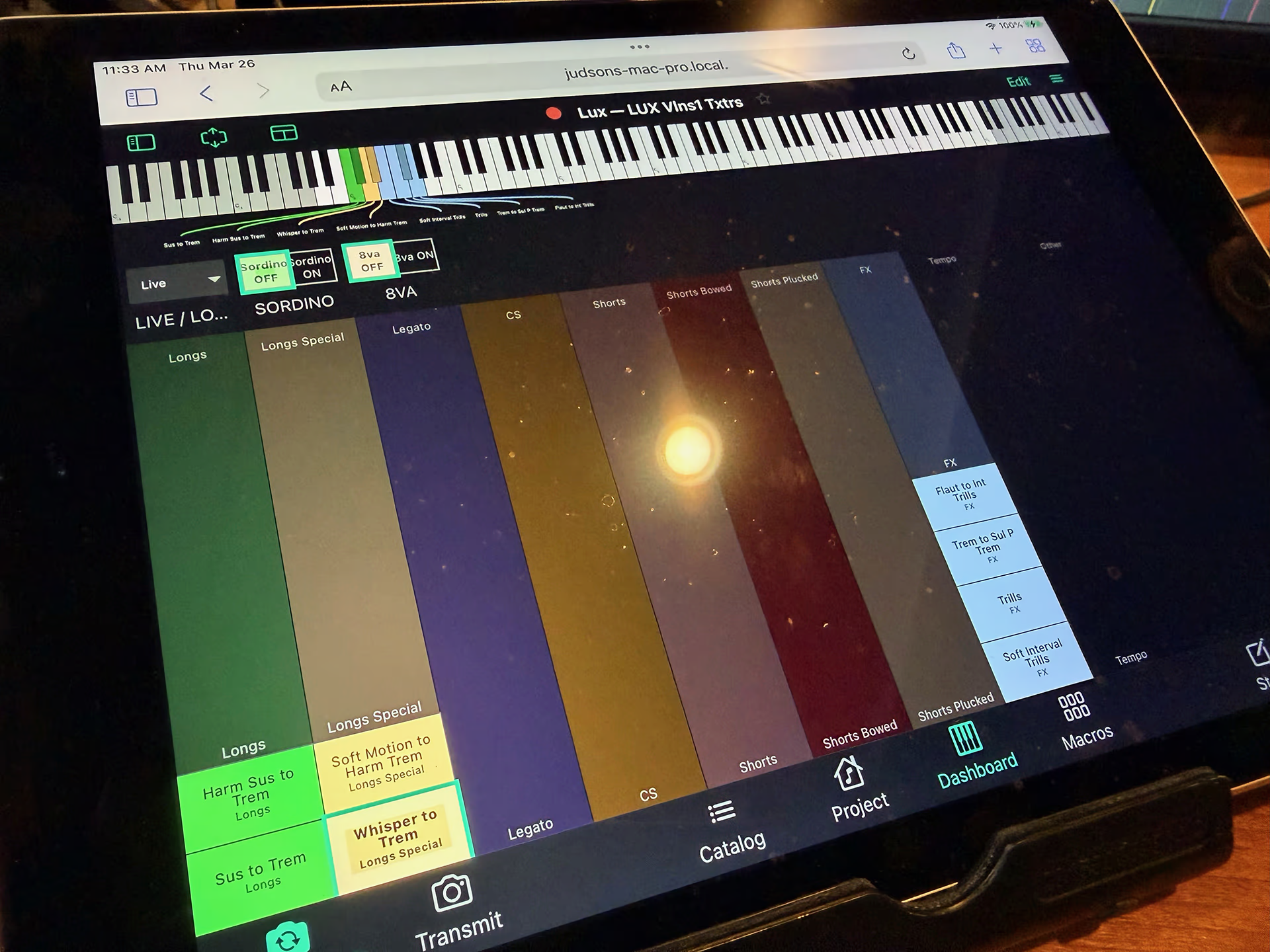
He was just as impressed by the articulation morphing; you can go from spiccato to marcato and then something else all on one track, instead of stacking patches with key switches. For someone with a huge template like his, combining three tracks into one really matters.
The Bleed Mics Moment
Mid-interview, with Schepetkov clearly already enthusiastic about the library, something else happened. He was asked about the bleed mics.
He did not know about the bleed mics; he had not explored them. The bleed mic system in LUX Orchestral Strings captures the brass mics, the percussion mics, and the rest of the orchestra’s microphones while the strings are being recorded, so that you can bring the natural microphone bleed of a full orchestra session back into the strings on demand. It is what glues a string library together, putting you right in the room.
He opened LUX Orchestral Strings. He played a chord and faded in the bleed mics.
“This is something else entirely. The reverb, the space, it’s incredible.“
Now he’s planning out loud, mid-interview. The bleed would go on solo and single-mic passages, where most string libraries are too big to sit convincingly alongside a real string quartet recording.
“I have one project where I played like a string quartet, and every string library I added to it was too big. With bleed mics, I can build the stage. This is incredible. Reverb can’t do that. Reverb can never do that.“